
Color is one of the first things we perceive in food.
Before aroma, before flavor, even before reading the label, color shapes the expectations of the consumer.
For decades, the food industry relied on synthetic colorants to achieve intense, consistent, and stable tones. However, in recent years something fundamental has changed: color is no longer only about aesthetics — it is also about transparency, origin, and trust.
Today, we are entering a new era of natural colorants.
A Shift Driven by Consumers, Regulation, and Technology
The global market for natural food colorants continues to grow rapidly. By 2026 it is expected to surpass $2.15 billion and could reach more than $3.2 billion by 2031, driven by consumer demand for naturally derived ingredients and increasing regulatory scrutiny of synthetic dyes.
This transformation is being driven by three key forces:
More informed consumers
Today’s consumers are paying closer attention to ingredient lists. Clean labels, plant-based ingredients, and recognizable components have become decisive factors when choosing a product.
Regulatory pressure
Food safety authorities are increasingly reviewing the use of petroleum-derived synthetic dyes. In the United States, the FDA has begun a process to phase out several synthetic dyes and promote safer, naturally derived alternatives.
In addition, updated labeling policies now allow manufacturers to highlight claims such as “no artificial colors” when natural pigments are used instead of synthetic dyes.
Reformulation by major brands
Large food companies are also responding to these changes. Several global brands have announced plans to remove artificial dyes from parts of their product portfolios in the coming years in response to both regulatory developments and consumer expectations.
Retailers are taking similar steps. Some grocery chains have already begun removing products containing synthetic dyes from certain categories, accelerating the transition toward natural color solutions.
The Innovation Behind Natural Color
Only a few years ago, natural colorants were often considered limited in performance and difficult to work with. Today, that perception is changing rapidly.
Advances in ingredient research and extraction technologies have expanded the palette of natural pigments while improving their stability and functionality. New pigments derived from algae, flowers, fruits, and minerals are now entering the market, offering food manufacturers more formulation options than ever before.
Among the most widely used natural pigments today are:
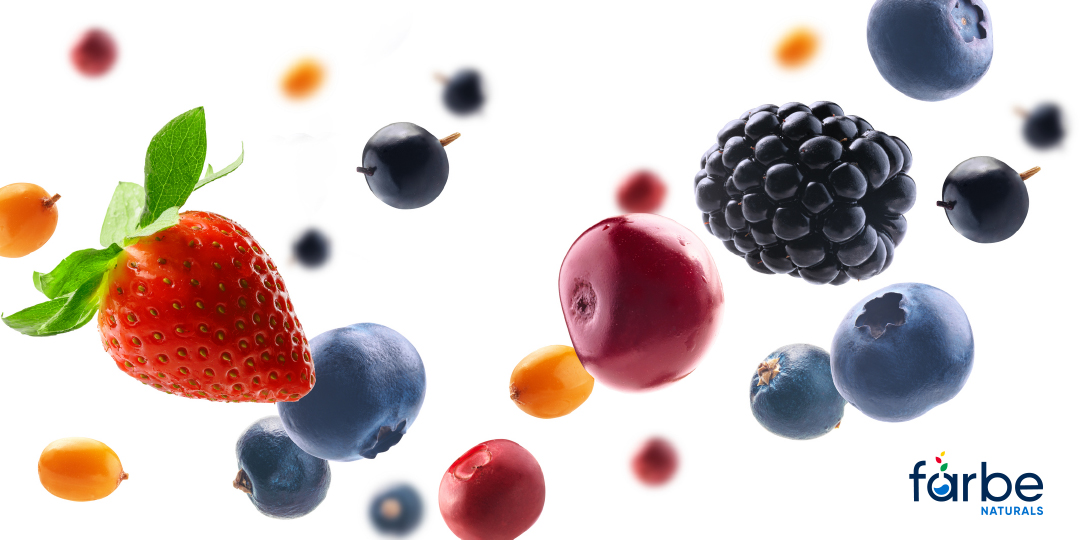
- Anthocyanins, derived from berries such as blueberries and blackberries
- Betanin, extracted from beetroot
- Curcumin, obtained from turmeric
- Chlorophyll, sourced from green plants
- Phycocyanin, extracted from blue spirulina
These pigments allow manufacturers to achieve vibrant colors while maintaining alignment with natural ingredient sourcing.
The challenge is no longer simply replacing synthetic dyes, but integrating color into a balanced formulation, where stability, flavor, pH, and processing conditions work together.
Color as the Language of Food
Beyond technology, color also plays a powerful sensory and cultural role.
A vibrant blue may communicate creativity in a dessert.
A deep red can suggest ripe fruit.
A warm yellow evokes spices or fresh ingredients.
In this sense, color functions as a visual language of food.
When that color comes from natural sources, the message becomes even stronger: it communicates origin, transparency, and authenticity.
The Role of Natural Innovation
The shift toward natural pigments is not simply about removing artificial ingredients. It requires the development of technological solutions that allow manufacturers to maintain quality, stability, and consistency while meeting evolving consumer and regulatory expectations.
In this context, ingredient innovators are playing a critical role.
At Farbe Naturals, the development of colorants derived from fruits, roots, vegetables, and algae reflects this new phase of food innovation.
Its portfolio of natural pigments — including anthocyanins, betanin, curcumin, chlorophyll, and blue spirulina — enables manufacturers to create visually appealing foods aligned with Clean Label formulations and the growing demand for naturally sourced ingredients.
Because in modern food innovation, color is no longer just decoration. It is identity, transparency, and trust. And increasingly, that color comes directly from nature.
← Back to all articles